
If you accept credit or debit cards online, there’s one topic you’ve probably heard about—but may not fully understand: PCI compliance.
For many merchants, PCI feels confusing, technical, or even optional. In reality, it quietly affects approval rates, chargebacks, fraud losses, fines, and even whether your payment account stays active.
This guide breaks down certified PCI compliance in plain language, explains why it matters to your business, and shows how to stay compliant without slowing down growth.
Why Merchants Get Stuck With PCI Compliance
Most merchants don’t ignore PCI compliance on purpose. They struggle because:
- The requirements sound technical and vague
- Payment providers mention it after onboarding, not before
- There’s confusion between being compliant and being certified
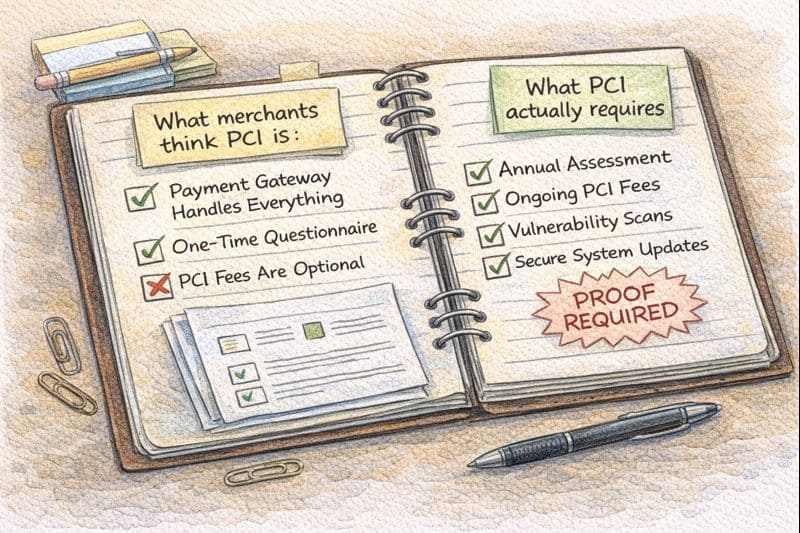
- Merchants assume their gateway “handles everything”
The result? Businesses unknowingly operate out of compliance until something goes wrong.
What PCI Compliance Actually Means
PCI stands for Payment Card Industry. PCI compliance refers to a set of security standards designed to protect cardholder data during payment processing.
If your business:
- Accepts card payments online
- Stores, processes, or transmits card data
- Uses a payment gateway or merchant account
…then PCI compliance applies to you.
Being certified PCI compliant means your business has completed the required validation steps based on how payments flow through your system.
Certified vs. Non-Certified PCI Compliance
This is where many merchants get confused.
- Non-certified: You may be following some security practices, but you haven’t officially validated compliance
- Certified: You’ve completed the required PCI questionnaire, scans (if needed), and documentation
Certification matters because acquiring banks and card networks expect proof, not assumptions.
Why PCI Compliance Matters More Than Merchants Realize
PCI compliance isn’t just about avoiding rules—it directly impacts your bottom line.
1. Prevents Data Breaches and Fraud Losses
Stolen card data leads to refunds, chargebacks, penalties, and reputation damage.
2. Reduces Chargebacks
Compromised data often triggers fraudulent transactions that come back as chargebacks.
3. Avoids Monthly Non-Compliance Fees
Many processors quietly charge extra fees to merchants who aren’t validated.
4. Protects Your Merchant Account
Repeated violations or a single major breach can lead to account termination.
Common PCI Compliance Myths That Hurt Merchants
“My payment gateway handles PCI, so I don’t need to.”
Gateways help—but merchants still have responsibilities.
“I don’t store card data, so PCI doesn’t apply.”
If card data passes through your site or checkout, it still applies.
“Small businesses aren’t targeted.”
Smaller merchants are often easier targets due to weaker security.
What Merchants Are Actually Required to Do
Requirements depend on how you accept payments, but typically include:
- Completing a PCI Self-Assessment Questionnaire (SAQ)
- Using a secure, PCI-approved payment gateway
- Keeping software and plugins updated
- Protecting login credentials and admin access
- Running vulnerability scans (for some setups)
Most online merchants fall into simpler compliance categories than they expect.
How to Stay PCI Compliant Without Slowing Growth
Smart merchants treat PCI as part of their payment setup—not a separate burden.
Best practices include:
- Choosing gateways that reduce your compliance scope
- Avoiding storage of raw card data
- Using hosted or tokenized checkout pages
- Reviewing compliance status annually
- Working with providers who actively support PCI validation
The easier compliance feels, the more likely it stays done.
The Real Cost of Ignoring PCI Compliance
Merchants usually feel the impact after something goes wrong:
- Unexpected fines
- Account freezes
- Forced audits
- Lost customer trust
- Higher processing risk scores
PCI compliance is cheaper and simpler before a problem than after one.
Final Thoughts: PCI Compliance Is Business Protection
Certified PCI compliance isn’t just a checkbox—it’s protection for your customers, your revenue, and your merchant account.
When handled correctly, it:
- Improves trust
- Reduces disputes
- Keeps payments flowing smoothly
- Protects long-term growth
If you accept card payments, understanding PCI compliance isn’t optional anymore—it’s part of running a responsible online business.