
By 2016, mobile ecommerce was no longer an emerging trend — it was rapidly becoming the primary way customers shop online. With smartphones driving a significant share of global online traffic, merchants who failed to optimize their mobile payment pages were seeing higher cart abandonment rates and declining conversions.
While businesses invested heavily in mobile-friendly storefronts, many overlooked the most critical step in the customer journey: the payment page. A poorly optimized mobile checkout can undo an otherwise seamless shopping experience.
This blog explores why mobile payment page optimization became essential in 2016 and how merchants could improve mobile ecommerce payment performance to increase sales and customer satisfaction.
The Rise of Mobile Ecommerce Payments
By mid-2016, industry reports showed mobile devices accounting for nearly half of ecommerce website traffic worldwide. Consumers were increasingly comfortable browsing, comparing products, and completing purchases directly from their phones.
However, merchants quickly discovered that mobile browsing did not always translate into mobile conversions. Payment friction, slow loading checkout pages, and complicated form fields often discouraged customers from completing transactions.
Businesses that invested in mobile payment gateway optimization and responsive checkout design began gaining a competitive advantage in the ecommerce market.
Why Mobile Payment Optimization Matters
A mobile-optimized payment page directly influences:
- Conversion rate optimization
- Reduced cart abandonment
- Improved user experience
- Higher customer trust
- Faster payment processing
In 2016, ecommerce platforms began recognizing that mobile shoppers expected speed, simplicity, and security when entering payment details.
Common Mobile Checkout Challenges in 2016
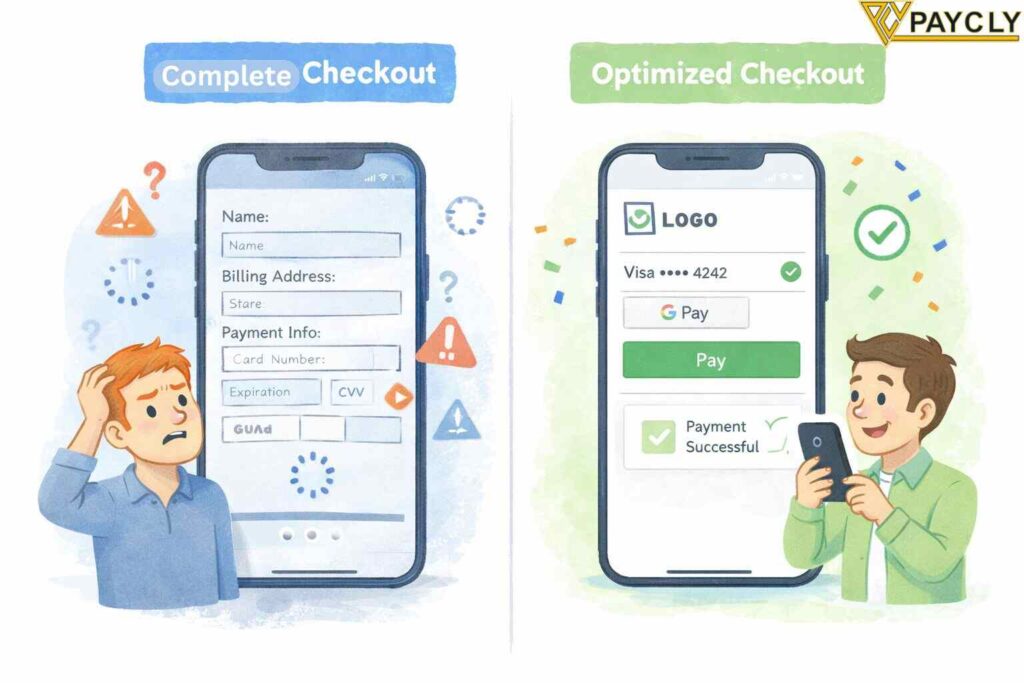
1. Complex Payment Forms
Traditional checkout pages were designed for desktop users. When displayed on smaller screens, these forms often required excessive typing and scrolling.
Customers found it frustrating to enter lengthy billing details on mobile keyboards, increasing the risk of checkout abandonment.
2. Slow Payment Page Load Times
Mobile users frequently rely on slower internet connections compared to desktop users. Heavy scripts, unoptimized images, and poorly configured payment gateways slowed down checkout performance.
Slow loading payment pages negatively impacted both user experience and search rankings.
3. Limited Mobile Payment Options
In 2016, customer expectations were evolving rapidly. Merchants offering only credit card payments often lost customers who preferred digital wallets or alternative payment methods.
4. Security Concerns
Mobile users were cautious about entering card details on unfamiliar or poorly designed payment pages. Lack of visible trust signals reduced customer confidence and transaction success rates.
Key Strategies for Mobile Payment Page Optimization
Simplify the Checkout Process
One of the most effective ways to improve mobile ecommerce conversions is reducing unnecessary checkout steps. Merchants began adopting:
- Single-page mobile checkout
- Guest checkout options
- Auto-fill payment details
- Smart form validation
Simplified payment forms reduced friction and improved the overall mobile shopping experience.
Implement Responsive Payment Gateway Design
Responsive checkout pages automatically adjust to different screen sizes, ensuring consistent usability across devices. A well-designed mobile payment gateway solution should provide:
- Touch-friendly payment buttons
- Easy navigation between fields
- Optimized card input interfaces
- Clear call-to-action elements
Responsive payment interfaces became a standard expectation in 2016.
Offer Multiple Mobile Payment Methods
Mobile consumers prefer flexible payment choices. Merchants who supported multiple payment options experienced higher conversion rates and improved customer retention.
Popular mobile payment solutions included:
- Credit and debit cards
- Digital wallets
- Alternative payment methods
- International payment processing solutions
Supporting diverse payment options also helped businesses expand into cross-border ecommerce markets.
Optimize Payment Page Speed
Page load speed plays a major role in mobile ecommerce performance. Merchants focused on improving payment processing speed by:
- Reducing unnecessary scripts
- Compressing payment page images
- Using faster payment gateway integrations
- Implementing secure but lightweight encryption methods
Faster payment processing reduces transaction drop-offs and improves user satisfaction.
Strengthen Payment Security and Trust Signals
In 2016, customer trust became a major factor in mobile payment success. Merchants began displaying security indicators such as:
- SSL certification badges
- PCI compliance indicators
- Secure payment logos
- Customer reassurance messages
Visible trust signals encouraged customers to complete mobile transactions with confidence.
The Role of Mobile Payment UX in Conversion Optimization
Mobile payment user experience (UX) became a key differentiator for ecommerce businesses. A seamless mobile checkout flow reduces friction and increases customer satisfaction.
Best practices for mobile payment UX include:
- Clear progress indicators
- Minimal data entry requirements
- Consistent branding across checkout pages
- Instant payment confirmation
Improved UX design helps merchants build long-term customer loyalty.
How Optimized Mobile Payment Pages Increase Sales
Businesses that invested in mobile ecommerce payment optimization in 2016 reported:
- Higher mobile conversion rates
- Lower payment abandonment
- Increased repeat purchases
- Improved global ecommerce reach
- Better customer engagement
Mobile-first payment strategies became essential for ecommerce growth and competitive positioning.
The Future of Mobile Ecommerce Payments
As mobile shopping continued expanding, industry experts predicted the growth of:
- One-click mobile checkout solutions
- Biometric payment authentication
- Advanced mobile fraud prevention systems
- Personalized checkout experiences
Merchants adopting mobile payment optimization early positioned themselves for long-term ecommerce success.
Conclusion
Optimizing your payment page for mobile ecommerce is no longer optional — it is a critical requirement for improving conversion rates and customer satisfaction. By simplifying checkout processes, improving payment gateway performance, offering flexible payment methods, and strengthening security, merchants can significantly enhance mobile ecommerce success.
Businesses that prioritize mobile payment optimization will continue to benefit from growing smartphone commerce trends and evolving customer expectations.