
A gaming merchant account is essential for businesses that need reliable payment processing while managing the higher fraud and dispute risks associated with online gaming. Chargebacks can quickly affect revenue, payment approval rates, cash flow and relationships with acquiring partners, making effective chargeback prevention a priority for gaming operators. For high-risk merchants, the challenge is not simply accepting card payments—it is building a payment setup that balances fraud protection, transaction approval, customer experience and dependable settlement.
Gaming businesses can face a more complicated payment environment than conventional eCommerce merchants. Frequent transactions, card-not-present payments, international customers, digital products, account deposits and withdrawals can all create additional risk considerations. That is why choosing appropriate gaming payment processing infrastructure should be part of the business strategy from the beginning.
The good news is that chargebacks are not simply a cost of doing business. A well-designed payment operation can identify preventable disputes, strengthen transaction security and give merchants better control over payment risk.
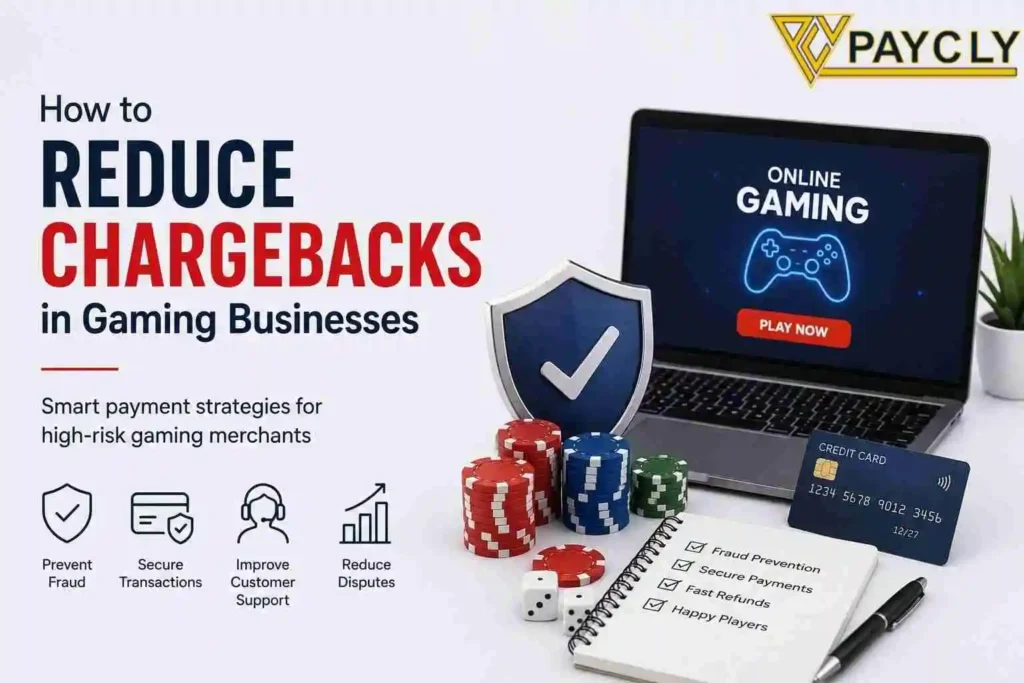
Why Chargebacks Are a Serious Problem for Gaming Businesses
A chargeback occurs when a cardholder disputes a transaction through their card issuer rather than resolving the issue directly with the merchant.
For a gaming business, one disputed payment may not seem significant. The problem starts when disputes become a recurring pattern.
High-risk merchants can experience chargebacks for several reasons:
- Customers do not recognize the transaction on their statement.
- A payment was made using compromised card details.
- Customers claim a transaction was unauthorized.
- Players misunderstand recurring or repeat charges.
- A refund request was not handled quickly.
- Friendly fraud occurs after a legitimate purchase.
- Fraudsters deliberately test stolen payment credentials.
- Customers dispute transactions because they believe a service or digital purchase was not delivered.
When chargeback levels rise, the consequences can extend beyond the disputed amount. Depending on the acquiring relationship and applicable rules, merchants may face additional monitoring, increased processing costs, reserves, underwriting reviews or restrictions.
This is particularly painful for high-risk merchant account holders because their acquiring relationships may already be subject to closer risk assessment.
PAYCLY’s published gaming payment material identifies chargebacks, fraud exposure and other risk factors as important considerations for gaming merchants and describes tools including 3D Secure, AVS/CVV checks, fraud scoring, tokenization and chargeback-prevention measures.
Don’t Wait Until a Chargeback Happens
One of the biggest mistakes gaming operators make is treating chargebacks as a customer-service problem that begins after the dispute arrives.
By that point, the transaction has already created risk.
Effective chargeback management starts before the payment is approved.
Your payment infrastructure should help you understand transactions based on factors such as:
- Customer location
- Transaction amount
- Payment method
- Transaction frequency
- Device information
- Previous payment history
- Authentication results
- Refund activity
- Previous disputes
- Unusual transaction patterns
This allows merchants to identify potentially problematic activity earlier.
For example, a sudden series of high-value transactions from a new customer may deserve additional verification. At the same time, automatically rejecting every unusual transaction could hurt legitimate customers and increase payment declines.
The objective is not maximum blocking.
The objective is better risk decisions.
Use 3D Secure Without Creating Unnecessary Friction
3D Secure can provide an additional layer of authentication for card-not-present transactions.
For gaming businesses, authentication can be particularly useful when transaction risk is elevated. However, simply adding more authentication to every transaction is not necessarily the best customer experience.
A better gaming payment gateway strategy uses risk-based controls where appropriate and keeps the checkout process as straightforward as possible for legitimate customers.
Gaming operators should discuss with their payment provider:
- 3D Secure availability
- Authentication workflows
- Fraud scoring
- Exemption handling where applicable
- Card verification
- Transaction monitoring
- How failed authentication affects approval rates
The right configuration can help protect transactions without unnecessarily turning the checkout into a series of verification screens.
Make Your Billing Descriptor Easy to Recognize
Some chargebacks can begin with something surprisingly simple: the customer does not recognize the merchant name appearing on their card statement.
A player may remember the name of the gaming platform but see a different legal entity or payment descriptor on their statement.
If the transaction appears unfamiliar, the customer may contact their bank rather than contacting the merchant.
Gaming operators should therefore make transaction descriptors as recognizable and consistent as their acquiring setup permits.
Confirmation emails and receipts should also clearly explain:
- Merchant name
- Transaction amount
- Date of purchase
- Product or service
- Customer support contact
- Refund or cancellation information
The more clearly the transaction can be identified, the less likely an otherwise legitimate payment is to become an “unrecognized transaction” dispute.
Give Customers a Clear Way to Request Refunds
A customer who cannot reach the merchant has another obvious option: their bank.
That does not mean every refund request should be approved. It means gaming businesses need a clear process for handling legitimate billing complaints before they escalate into disputes.
A practical customer-support process should include:
- An easy-to-find support channel.
- Clear refund and cancellation policies.
- Fast responses to billing questions.
- Accessible transaction records.
- Consistent communication with customers.
- A documented process for handling disputed transactions.
PAYCLY’s published chargeback-management guidance also emphasizes refunds, customer support, chargeback alerts and chargeback diversion as components of a broader dispute-management approach.
For high-risk businesses, customer support is therefore not simply a branding function. It can form part of the overall payment-risk strategy.
Monitor Friendly Fraud Separately From Criminal Fraud
Not every chargeback is the result of stolen card information.
Friendly fraud occurs when a legitimate customer disputes a transaction even though the merchant may have valid evidence that the payment was authorized or the service was provided.
Gaming businesses can encounter disputes involving:
- Unrecognized transactions
- Claims of unauthorized payments
- Forgotten deposits
- Disagreements about transactions
- Confusion over recurring payments
- Family members using a payment card
- Customers attempting to reverse legitimate transactions
The response should depend on the reason for the dispute.
Merchants should maintain appropriate records that may help establish what happened, including transaction information, authentication data where applicable, customer communications, refund records and relevant service or account records.
Good documentation gives the merchant a stronger position when a legitimate dispute needs to be challenged.
Protect Repeat and Recurring Transactions
Gaming businesses often depend heavily on repeat customers.
That creates an additional challenge. A customer who understands their first payment may not fully understand a later recurring transaction, membership charge or subscription renewal.
The checkout process should clearly explain what the customer is purchasing and how future charges work.
For recurring billing, customers should understand:
- The payment amount or pricing structure
- The billing frequency
- Whether the payment automatically renews
- How cancellation works
- When the next payment will occur
- How to contact customer support
Clear payment communication can reduce disputes without putting unnecessary friction into the customer journey.
Don’t Depend on One Acquirer
There is another issue that high-risk merchants understand particularly well: approval is not the same as payment stability.
A gaming business might finally secure a merchant account after extensive underwriting, only to encounter difficulties later when transaction volumes increase, new markets are added or chargebacks rise.
Possible pain points include:
- Additional underwriting requests
- Rolling reserves
- Settlement delays
- Processing limits
- Sudden risk reviews
- Higher processing costs
- Merchant account suspension
- Termination of an acquiring relationship
For a business dependent on one payment route, any disruption can immediately affect revenue.
That is why established gaming operators may consider multiple acquiring relationships, alternative payment methods and payment-routing strategies where commercially and legally appropriate.
A high-risk payment gateway connected to suitable acquiring infrastructure can provide greater flexibility than a setup dependent on one processing route.
Look Beyond the Headline Processing Rate
When comparing gaming merchant services, transaction pricing is important—but it should not be the only consideration.
A provider offering the lowest advertised rate may not necessarily deliver the best commercial outcome if the account has restrictive settlement terms, limited payment methods or inadequate risk-management support.
Gaming operators should evaluate:
1: Acquiring coverage: Understand where transactions are acquired and which markets the provider can support.
2: Chargeback management: Ask whether the provider offers alerts, monitoring, dispute workflows or other chargeback-management services.
3: Fraud prevention: Check which tools are available for transaction screening, authentication and suspicious-activity detection.
4: Settlement terms: Review settlement timelines, reserve requirements, payout conditions and potential volume restrictions.
5: Payment methods: Consider whether the payment infrastructure supports the cards, wallets and alternative payment methods your customers actually use.
6: Reporting: A merchant should be able to identify payment failures, refunds, disputes and transaction patterns without relying on guesswork.
7: Scalability: The account should be evaluated against expected growth—not just today’s transaction volume.
A payment setup that works at £50,000 a month may need a different risk and acquiring structure when processing reaches several hundred thousand pounds.
Track Chargebacks Like a Business Metric
Reducing chargebacks becomes easier when merchants know exactly where disputes are coming from.
Track chargebacks by:
- Payment method
- Country
- Product or game
- Transaction value
- Customer type
- Acquisition channel
- Transaction date
- Dispute reason
- Refund status
Then compare those figures with your successful transactions and payment declines.
For example, if disputes are disproportionately high for one payment method, that route deserves investigation. If disputes increase after entering a particular market, the merchant should review customer communication, fraud controls and transaction patterns in that market.
This turns chargeback prevention from a reactive exercise into an ongoing payment-performance process.
High-Risk Merchants Need Payment Stability, Not Just Approval
One of the biggest frustrations for high-risk account holders is that obtaining approval can feel like the hardest part—but problems often begin after approval.
A merchant can be operating legitimately, processing growing volumes and following its stated business model, yet still encounter additional reviews when its risk profile changes.
For gaming businesses, payment stability depends on maintaining a healthy relationship between:
Business model + compliance + acquiring + fraud controls + customer experience + transaction performance
If one part fails, the others can be affected.
This is why merchants should be transparent during onboarding about their business model, expected processing volumes, target markets, payment flows and licensing or regulatory position where applicable.
Trying to disguise a gaming business as a lower-risk business is not a sustainable solution. The stronger approach is to work with an acquiring structure that understands the actual business activity.
Build Chargeback Prevention Into Your Gaming Payment Strategy
There is no single tool that will eliminate chargebacks.
The strongest strategy combines multiple layers:
1: Before payment: fraud screening, customer verification and risk scoring.
2: During payment: appropriate authentication, secure checkout and transaction monitoring.
3: After payment: recognizable billing, receipts, customer support and clear refund processes.
4: When a dispute occurs: accurate records, timely investigation and appropriate dispute responses.
5: At the infrastructure level: suitable acquiring relationships, payment redundancy and reliable settlement.
That combination can help gaming businesses reduce avoidable disputes while protecting legitimate payment conversion.
Paycly published merchant protection information describes chargeback prevention, fraud protection, transaction monitoring and global transaction capabilities as part of its merchant protection approach, subject to its eligibility requirements.
Choose a Gaming Payment Partner That Understands the Risk
For a gaming operator, the right gaming merchant account is more than a facility for accepting card payments. It is part of the infrastructure that supports revenue, customer experience and operational continuity.
If chargebacks are increasing, payments are being declined, settlements are becoming unpredictable or your existing processor is requesting repeated reviews, it may be time to reassess the payment setup rather than simply trying to treat individual disputes.
PAYCLY offers industry-specific gaming merchant accounts, high-risk payment solutions and payment infrastructure designed for businesses operating in higher-risk sectors. Its published gaming solution includes features such as fraud screening, 3D Secure, tokenization, multiple currencies and chargeback-prevention tools.
Looking for a more reliable gaming payment setup? Explore PAYCLY’s Gaming Merchant Account and discuss your business model, target markets, processing requirements and risk-management needs with the payment team.
The goal is not simply to process more transactions. It is to approve legitimate payments, prevent avoidable chargebacks and build a payment operation that can support sustainable growth.