
For any business that wants to accept credit card payments, a credit card merchant account is a basic requirement. While many business owners hear this term early on, few understand what it actually does or how it works behind the scenes.
This guide explains what a credit card merchant account is, why businesses need one, and how payments move from a customer’s card into your bank account.
What Is a Credit Card Merchant Account?
A credit card merchant account is a special type of account provided by a bank or payment processor that allows businesses to accept card payments. It acts as a temporary holding place for funds before they are transferred to the business’s regular bank account.
Unlike a standard bank account, a merchant account is designed specifically to handle card transactions, refunds, and chargebacks.
Without a merchant account, businesses cannot properly process credit card payments.
Why Merchant Accounts Are Required for Card Payments
Credit card payments involve multiple parties, including banks, card networks, and processors. Because of this complexity, funds cannot be deposited directly into a normal bank account.
A merchant account exists to:
- Receive authorized card payments
- Hold funds during settlement
- Manage refunds and chargebacks
- Reduce risk for banks and card networks
This structure protects both the customer and the business.
How a Credit Card Merchant Account Works
Understanding how a merchant account works makes payment processing much easier to manage.
Here’s a simple breakdown of the process:
- A customer enters their credit card details on your website
- The payment gateway for online businesses securely sends the information for authorization
- The transaction is approved
- Funds are placed into the merchant account
- Funds are settled into the business’s bank account
This entire process usually takes a few days, depending on the provider.
Merchant Account vs Regular Bank Account
Many businesses assume a merchant account works like a normal bank account, but there are key differences.
| Merchant Account | Regular Bank Account |
| Holds card payment funds temporarily | Stores business funds long-term |
| Handles refunds and chargebacks | Does not support card disputes |
| Requires approval and underwriting | Opened with minimal review |
| Linked to payment processing | Not designed for card payments |
Both accounts are necessary, but they serve very different roles.
Who Needs a Credit Card Merchant Account?
Most businesses that want to accept credit card payments online or in-store need a merchant account, including:
- Online stores
- Subscription-based services
- Service providers
- International businesses accepting card payments
Businesses selling to overseas customers should also consider providers experienced in international payment processing.
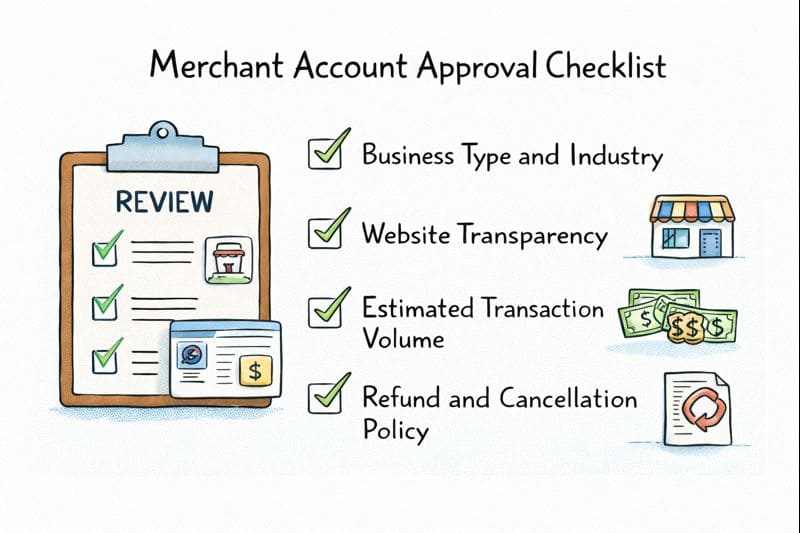
What Providers Look for Before Approval
Before approving a merchant account, providers usually review:
- Business type and industry
- Website clarity and transparency
- Expected transaction volume
- Refund and cancellation policies
This review helps reduce risk and ensures the business can handle card payments responsibly.
Common Issues New Merchants Face
Some businesses run into problems after setting up a merchant account due to:
- Unclear billing terms
- High refund rates
- Unexpected chargebacks
- Incorrect transaction estimates
Understanding how a merchant account works helps avoid these issues early.
Final Thoughts
A credit card merchant account is the foundation of card payment processing. It allows businesses to receive funds securely, manage transactions properly, and build trust with customers.
By understanding how a merchant account works and how it fits into the payment process, businesses can make better decisions and create a smoother payment experience.