
Once you understand how a credit card merchant account works, the next step is applying for one that fits your business. For many online businesses, this is where confusion begins — not because the process is complicated, but because requirements are often unclear.
This guide breaks down how to apply for a credit card merchant account, what providers look for, and how to prepare before submitting an application.
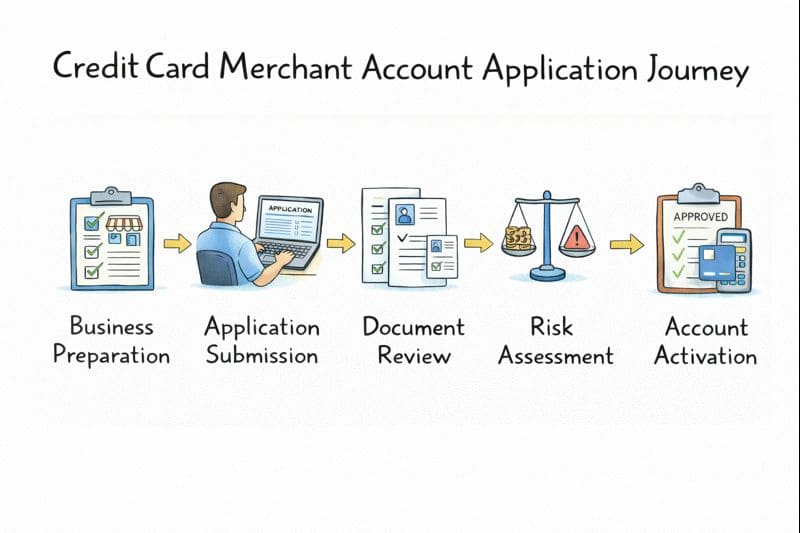
Step 1: Understand If You’re Ready to Apply
Before starting the application, make sure your business is ready for review. Most providers assess whether you can reliably accept and manage card payments.
You should already have:
- A registered business
- A business bank account
- A working website that clearly explains what you sell
If you’re still unfamiliar with the basics, it helps to first understand what a credit card merchant account is and how it works, as approval decisions are based on how payments flow through your business.
Step 2: Prepare Your Business Information
Merchant account applications are detail-oriented. Providers want a clear picture of who you are and how you operate.
You’ll typically be asked for:
- Legal business name and address
- Business registration details
- Ownership or director information
- Contact details used on your website
Accuracy matters. Inconsistent information is one of the most common reasons applications are delayed.
Step 3: Get Your Website Ready for Review
A website review is a standard part of the approval process. Payment providers use it to verify legitimacy and reduce risk.
Make sure your website includes:
- A clear description of products or services
- Pricing and billing terms
- Refund and cancellation policies
- Contact information that matches your application
If you plan to accept credit card payments online, your site must reflect transparency and professionalism.
Step 4: Estimate Your Transaction Details
You’ll be asked to provide estimates such as:
- Average transaction value
- Expected monthly processing volume
- Target customer locations
These numbers don’t need to be exact, but they should be realistic. Overstating volume or underestimating refunds can raise concerns during review.
Step 5: Submit Required Documents
Most applications require basic documentation, including:
- Business registration certificate
- Bank account details
- Identity verification for owners
- Sometimes previous processing history
Having these ready in advance speeds up the process and reduces back-and-forth with the provider.
Step 6: Application Review and Risk Assessment
Once submitted, the provider reviews your application. This includes:
- Verifying business legitimacy
- Reviewing industry risk
- Assessing refund and chargeback exposure
This step exists to protect both the payment network and your business. Approval timelines vary depending on industry and business model.
Step 7: Approval and Account Setup
After approval, your credit card merchant account is activated and connected to a payment gateway. This allows you to begin processing live card transactions.
At this stage, you’ll receive:
- Processing credentials
- Settlement timelines
- Instructions for accepting payments securely
Common Mistakes to Avoid When Applying
Many applications fail for avoidable reasons:
- Incomplete website information
- Mismatched business details
- Unclear refund policies
- Unrealistic transaction estimates
Taking time to prepare properly increases your chances of approval and long-term account stability.
Final Thoughts
Applying for a credit card merchant account is not about speed — it’s about clarity. Providers want to understand how your business operates and how you handle payments responsibly.
If you’ve already learned how merchant accounts work, this process becomes much easier. With the right preparation, approval is simply the next step in building a reliable online payment setup.