
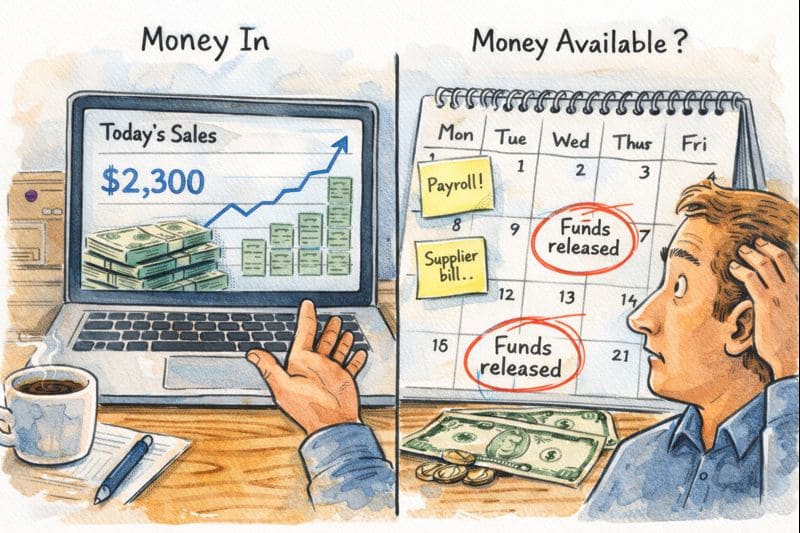
For many businesses, cash flow problems don’t start with sales, they start after the payment is approved.
You may be making consistent sales, seeing customers complete checkout, and receiving confirmation emails, yet still find yourself asking:
- “Why is my payout delayed?”
- “Why is less money hitting my bank than expected?”
- “Why does my balance fluctuate so much week to week?”
In many cases, the answer isn’t your business model. It’s your merchant account.
Why Cash Flow Issues Often Come from Payments
A merchant account controls how your card payments move from the customer to your bank account. While it operates quietly in the background, it has a direct impact on when and how much money you actually receive.
Small delays or deductions may not seem serious at first, but as transaction volume grows, they can quickly affect:
- Payroll timing
- Marketing spend
- Inventory purchases
- Day-to-day operations
Understanding how your merchant account affects cash flow helps you regain control.
The Journey of a Card Payment
A card payment doesn’t go straight into your bank account.
It typically follows this path:
- Customer completes payment
- Transaction is authorized
- Funds are held temporarily
- Payment is settled
- Money is deposited into your account
Each of these steps can influence timing, fees, and availability of funds.
Common Merchant Account Factors That Impact Cash Flow
1. Settlement Timeframes
One of the biggest cash flow challenges is delayed settlement.
Some merchant accounts settle funds daily, while others take several business days. For growing businesses, even a one- or two-day delay can make a noticeable difference.
What merchants feel:
Sales are strong, but the bank balance doesn’t reflect it yet.
2. Rolling Reserves
Certain merchant accounts hold back a percentage of each transaction as a reserve.
This money isn’t lost, but it’s unavailable for weeks or months.
How it affects cash flow:
Your reported revenue looks healthy, but usable cash is lower than expected.
3. Processing Fees and Deductions
Fees are often deducted before settlement:
- Processing fees
- Cross-border charges
- Currency conversion costs
When these aren’t clearly understood, businesses struggle to forecast incoming cash accurately.
4. Account Reviews and Holds
If transaction volume increases suddenly, some merchant accounts trigger manual reviews.
During this time:
- Settlements may slow
- Funds may be temporarily held
- Cash flow becomes unpredictable
This often happens when a business grows faster than its payment setup was designed for.
How Poor Business Cash Flow Impacts Growing Businesses
Payment-related cash flow issues can lead to:
- Delayed supplier payments
- Reduced marketing activity
- Missed growth opportunities
- Increased financial stress
The business may be profitable on paper, but constrained in reality.
Improving Cash Flow Through the Right Merchant Account
The right merchant account setup can significantly improve financial stability.
Faster Settlement Options
Accounts designed for higher volumes often offer quicker settlement cycles, helping businesses access funds sooner.
Transparent Fee Structures
Clear pricing makes it easier to forecast incoming cash and plan expenses.
Volume-Friendly Risk Management
Merchant accounts built for growth handle transaction spikes without sudden reviews or holds.
Better International Payment Handling
For businesses selling globally, optimized cross-border processing reduces delays and unexpected deductions.
Questions Every Business Should Ask
If cash flow feels tight despite good sales, it’s worth asking:
- How long does my merchant account take to settle funds?
- Are reserves being applied?
- What fees are deducted before payout?
- Is my account designed for my current transaction volume?
Often, the answers reveal opportunities to improve.
Final Thoughts
Merchant accounts do more than process payments — they directly influence cash flow, stability, and day-to-day operations.
When the wrong setup is in place, businesses feel constant financial pressure even when sales are strong. When the right merchant account supports the business, cash flow becomes predictable, manageable, and less stressful.
If your business is growing, reviewing how your merchant account affects cash flow isn’t optional — it’s essential for long-term stability.