
In 2015, online payments were no longer new — but they still weren’t easy.
For most businesses, accepting payments online meant dealing with long onboarding cycles, unclear technical documentation, and a lot of trial and error. For developers, payment integration was often the least enjoyable part of building a product. It worked… until it didn’t. And when something failed, finding out why was rarely straightforward.
That frustration is what quietly triggered a shift in the payments industry.
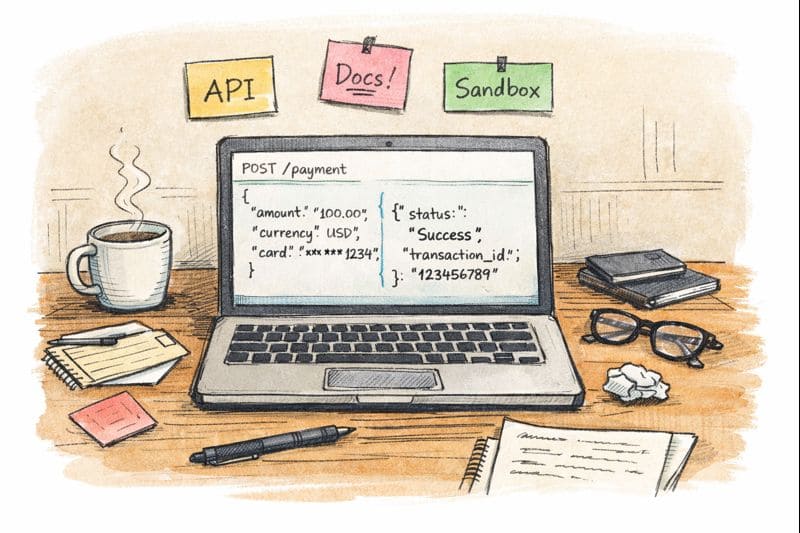
When Payments Were Built for Banks, Not Builders
Traditional payment gateways were designed to satisfy banks and processors first. Developers came last.
APIs existed, but they were rigid. Documentation was outdated or incomplete. Sandbox environments didn’t reflect real transaction behavior. Error responses were vague, often returning generic decline messages with no actionable insight.
A failed transaction could mean anything — issuer decline, fraud rule, regional restriction — but developers had no way to tell. This lack of transparency made payments unpredictable, especially for businesses selling across borders or operating in regulated industries.
By 2015, developers were no longer willing to accept that uncertainty.
The Shift Toward Developer-Friendly Payments
Around this time, a new type of payment gateway began emerging — one that treated developers as a primary user, not an afterthought.
Instead of complex setup processes, these platforms focused on:
- Clean, well-documented APIs
- Faster onboarding without excessive back-and-forth
- Reliable sandbox testing environments
- Clear transaction responses and status updates
The goal wasn’t to “disrupt finance.”
It was to remove friction from building products.
And for developers, that made all the difference.
Why Developers Started Influencing Gateway Choice
By 2015, development teams had more influence over tooling decisions than ever before. Businesses realized that a gateway that was easier to integrate often led to faster launches and fewer issues after going live.
Developer-friendly gateways enabled teams to:
- Implement payments without custom workarounds
- Handle callbacks and payment updates using webhooks
- Tokenize card data to reduce compliance overhead
- Diagnose failures without relying on support tickets
Payments began to feel less like a black box and more like a manageable system.
Cross-Border Payments Exposed Legacy Limitations
International transactions highlighted the weaknesses of older payment systems.
Merchants could be approved to accept payments globally, yet still experience high decline rates in certain countries. Developers were left guessing whether the issue was currency-related, issuer-driven, or tied to local regulations.
Gateways built with developers in mind started exposing these details:
- Country and card-type restrictions
- Authentication requirements
- Currency and settlement behavior
This visibility allowed businesses to adapt their payment flows instead of reacting blindly to failures.
A Turning Point for High-Risk Businesses
For high-risk merchants, payment challenges were even more severe.
Many gateways either declined them outright or applied strict rules without explanation. Developers had little insight into why transactions failed or how risk rules were enforced.
Developer-friendly platforms approached this differently. Risk logic became clearer. Limitations were communicated early. Payment data was accessible rather than hidden.
While risk didn’t disappear, it became something developers could design around — not something that stopped growth entirely.
Disruption Through Simplicity
What made developer-friendly gateways disruptive in 2015 wasn’t aggressive marketing or bold claims.
It was usability.
Developers gravitated toward platforms that respected their time, explained failures, and provided tools that worked as expected. Word spread through developer communities, documentation links were shared, and integration experiences became a deciding factor.
Quietly, expectations around payment infrastructure began to change.
The Direction Payments Are Heading
The future of payments doesn’t belong to the most complex systems.
It belongs to platforms that:
- Build with developers in mind
- Offer transparency instead of ambiguity
- Support global businesses without unnecessary friction
In 2016, developer-friendly gateways were still gaining momentum — but they were already redefining what merchants and developers expected from payment providers.
And once expectations change, the industry never goes back.