
If your online store attracts customers from different countries, there’s a common question you’ve probably faced:
“Should I let customers pay in their own currency?”
Many merchants start with a single currency and quickly run into problems:
- International customers abandon checkout
- Confusion over final prices
- Disputes caused by unexpected conversion charges
- Lower conversion rates from overseas buyers
Accepting multiple currencies online isn’t just about convenience — it’s about building trust and improving sales.
Why Currency Matters to Online Shoppers
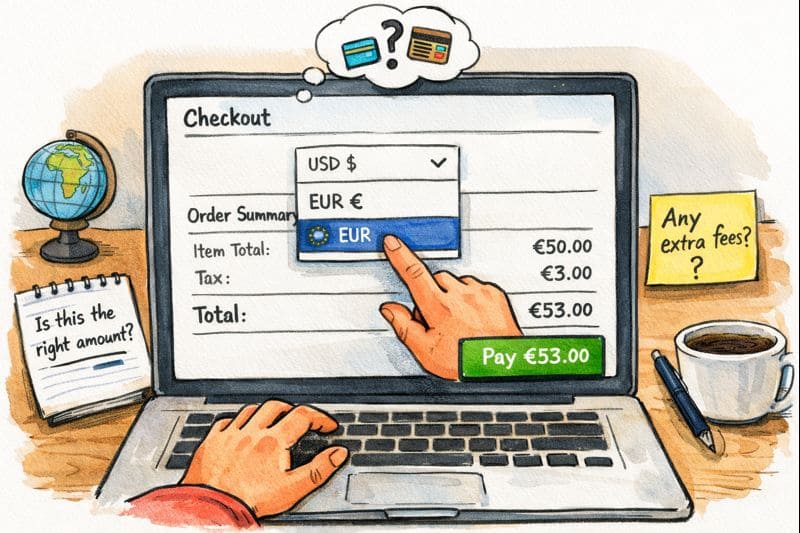
When customers see prices in a foreign currency, they hesitate. They start calculating exchange rates, worrying about bank fees, or wondering if the final amount will be higher.
Common buyer concerns include:
- “How much will my bank actually charge me?”
- “Will there be extra fees?”
- “Is this store really international?”
Displaying prices in a customer’s local currency removes uncertainty and makes the purchase feel familiar.
What Does “Accepting Multiple Currencies” Mean?
Accepting multiple currencies allows customers to:
- View prices in their local currency
- Pay using their credit card without manual conversion
- Understand the exact amount before completing checkout
Behind the scenes, your payment gateway or processor handles the currency conversion before settlement.
How Multi-Currency Payments Work
1. Customer Selects Their Currency
At checkout, the customer chooses their preferred currency or it’s detected automatically based on location.
Merchant concern: “Will this complicate my accounting?”
Reality: Most gateways convert and report transactions clearly.
2. Payment Gateway Handles Conversion
The gateway processes the payment and applies the exchange rate.
- Conversion may happen at the gateway, processor, or bank level
- Some gateways lock the exchange rate at checkout
3. Settlement to Merchant Account
Funds are settled:
- In your base currency
- Or into a multi-currency merchant account
Fees and exchange rates are applied before the final amount reaches you.
Common Problems Merchants Face
1. Unexpected Conversion Fees
Merchants often discover small deductions due to exchange rates and conversion fees.
Solution:
Work with a provider that clearly discloses conversion costs and supports transparent reporting.
2. Checkout Confusion
If prices change during checkout, customers may abandon their cart.
Solution:
Display currency clearly and lock the rate at checkout when possible.
3. Increased Chargebacks
Customers dispute charges when they see unfamiliar currency amounts on statements.
Solution:
Show the currency symbol clearly and include currency details on receipts.
Benefits of Accepting Multiple Currencies
- Higher conversion rates from international customers
- Reduced checkout friction
- Better customer trust and transparency
- Fewer payment disputes related to pricing
For merchants selling globally, multi-currency support often leads to measurable growth.
Best Practices for Multi-Currency Acceptance
- Offer currencies relevant to your target markets
- Use a gateway that supports automatic currency detection
- Clearly communicate exchange rates and fees
- Monitor international transaction performance
- Keep currency presentation consistent across the site
Is Multi-Currency Right for Your Business?
If your business serves international customers regularly, accepting multiple currencies is no longer optional — it’s a competitive advantage.
It simplifies buying decisions, improves customer confidence, and helps your brand feel truly global.
Final Thoughts
Accepting multiple currencies online bridges the gap between local shoppers and global merchants. When implemented correctly, it removes confusion, builds trust, and improves conversions without adding operational complexity.
For businesses expanding beyond borders, it’s one of the simplest ways to improve the customer payment experience.