
The global iGaming Payment Solutions industry is growing fast, but one thing every operator quickly learns is this—handling global payments is where the real money is made or lost.
Running an iGaming business sounds exciting from the outside—global players, fast growth, high traffic, and nonstop transactions.
But behind the scenes, there’s one thing that quietly decides whether a gaming platform survives or struggles:
“payments”
More specifically, how well you manage global payments in a high-risk industry.
Because while players only see a “deposit successful” or “withdraw pending” message, operators are dealing with banks, compliance rules, fraud checks, chargebacks, and cross-border restrictions—all at the same time.
And that’s where things get complicated.
Most iGaming businesses don’t fail because they lack users. They struggle because traditional banks and standard payment providers simply don’t understand the industry.
That’s why specialized providers like PayCly exist—to help high-risk merchants move money globally without constant disruptions.
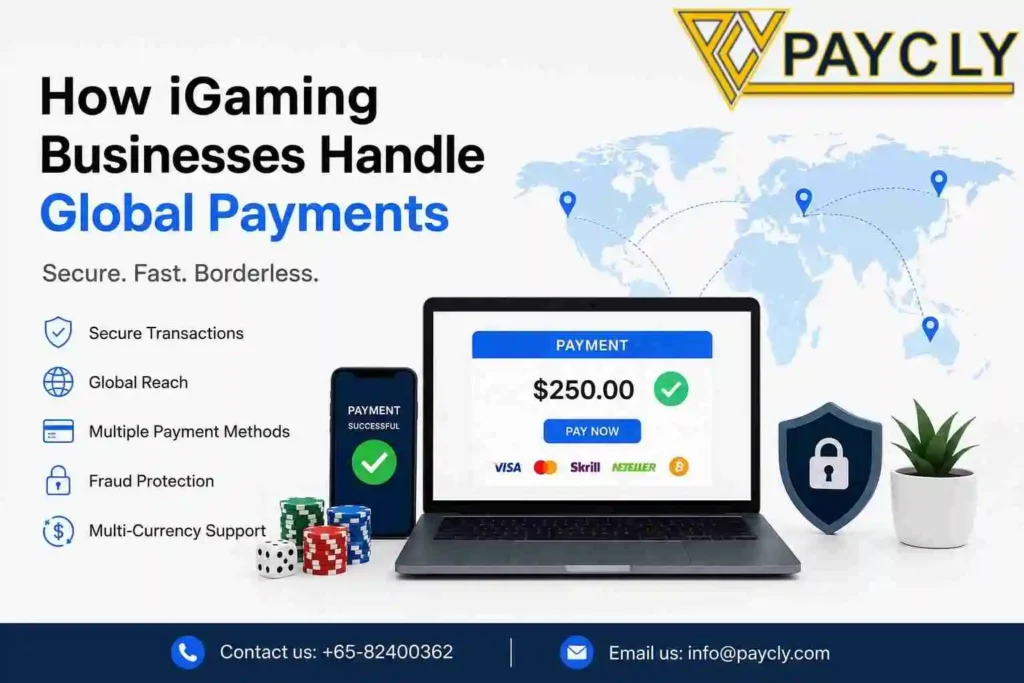
Why Global Payments Are So Difficult for iGaming Businesses
If you’ve ever tried to get a payment solution for a gaming platform, you probably already know the answer: it’s not easy.
Banks and processors label iGaming as “high-risk,” and that one label changes everything.
Here’s what it actually means in real life:
1: Too many chargebacks
Players sometimes dispute transactions after losses. Even a small spike in chargebacks can trigger account restrictions.
2: Banks get nervous with gaming traffic
Traditional banks prefer stable industries. Gaming feels unpredictable to them, so applications often get rejected.
3: Every country wants a different payment method
A player in Europe may use cards. In Asia, wallets dominate. In Latin America, local transfers matter more.
4: Fraud attempts are constant
Gaming platforms attract card testing, fake accounts, and bonus abuse attempts daily.
5: Compliance is strict and ongoing
KYC, AML, identity checks—it’s not a one-time setup. It’s continuous monitoring.
Put all of this together, and you get a payment environment that is far more complex than most industries ever deal with.
What High-Risk iGaming Merchants Actually Struggle With
Most people outside the industry don’t see this side of things, but operators deal with real pain points every day.
1: Getting rejected by payment providers
One of the most frustrating parts is simply getting approved for a High-Risk Merchant Account. Even legitimate businesses get turned away without clear reasons.
2: Sudden account freezes
A platform can be running smoothly one day and face a frozen account the next. That means blocked funds and halted operations.
3: High fees eating into revenue
Because of risk, payment processing fees are often much higher than standard businesses.
4: Payment failures during deposits
If a transaction fails at checkout, most users don’t retry—they leave.
5: Limited payment options for players
If users don’t see their preferred payment method, they rarely complete the deposit.
And in iGaming, a failed deposit isn’t just a lost transaction—it’s a lost player.
How Successful iGaming Platforms Manage Global Payments
The platforms that scale globally don’t rely on one provider or one system. They build a flexible payment setup designed for high-risk operations.
Here’s what that actually looks like in practice:
1. Using high-risk merchant accounts built for gaming
Instead of relying on traditional banks, gaming businesses use specialized High-Risk Merchant Accounts designed to handle:
- High transaction volumes
- International customers
- Gaming-related risk
- Chargeback management
This creates stability instead of constant disruptions.
2. Smarter payment routing
Modern Gaming Payment Gateways don’t just process payments—they optimize them.
They automatically route transactions through the best available path based on:
- Location
- Currency
- Card type
- Risk level
The result? Higher approval rates and fewer failed payments.
3. Letting players pay the way they want
One of the biggest improvements in conversion comes from flexibility.
Successful platforms support:
- Cards
- Bank transfers
- Digital wallets
- Local payment methods
- Crypto options (where allowed)
When users see familiar payment options, they trust the platform more—and complete deposits faster.
4. Multi-currency support that feels seamless
No one wants to think about conversion rates while gaming.
That’s why Multi-Currency Payment Processing matters. It lets users pay in their local currency while the business settles globally.
Less friction = more completed payments.
5. Strong fraud protection running in the background
Fraud is one of the biggest silent threats in iGaming.
Good systems protect businesses using:
- AI-based fraud detection
- Device tracking
- Risk scoring
- 3D Secure checks
The goal is simple: stop fraud without slowing down real users.
6. Managing chargebacks before they become a problem
Chargebacks don’t just hurt revenue—they affect your entire payment reputation.
A proper Chargeback Management system helps by:
- Flagging risky transactions early
- Monitoring dispute patterns
- Reducing unnecessary losses
- Protecting merchant accounts
Why Traditional Payment Systems Don’t Work for Gaming
Most standard payment processors are built for low-risk businesses like retail or subscriptions.
iGaming is different.
It involves:
- Global users
- High transaction volume
- Higher dispute rates
- Regulatory pressure
So when gaming companies try to use traditional systems, they often run into:
- Account closures
- Sudden fund holds
- Low approval rates
- Limited support
That’s why the industry depends heavily on specialized High-Risk Payment Processing providers.
Why Payment Experience Directly Impacts Revenue
In iGaming, payments aren’t just backend operations—they are part of the user experience.
A smooth payment flow means:
- Players deposit more easily
- Fewer users drop off
- Higher retention
- Faster gameplay engagement
But a bad payment experience? That usually means the player is gone for good.
How PayCly Helps iGaming Businesses Stay Live and Global
This is where things get practical.
PayCly works specifically with high-risk industries like iGaming, forex, and digital entertainment.
Instead of fighting the system, PayCly helps businesses build payment setups that actually work in real-world conditions.
That includes:
- High-risk merchant account solutions
- Gaming-friendly payment gateways
- Global payment acceptance
- Multi-currency processing
- Fraud protection systems
- Chargeback risk control
- Higher approval rate routing
The focus is simple: keep payments stable so businesses can scale without interruptions.
The Real Impact of Getting Payments Right
When iGaming businesses fix their payment infrastructure, the difference is immediate.
They usually see:
- Higher deposit success rates
- Fewer failed transactions
- Better player retention
- Lower fraud losses
- More stable revenue flow
- Easier global expansion
In this industry, payment performance isn’t just technical—it directly affects growth.
Final Thoughts
Global payments are one of the hardest parts of running an iGaming business—but also one of the most important.
Most challenges don’t come from lack of demand. They come from payment friction, banking restrictions, and high-risk classification issues.
The good news is that with the right setup—High-Risk Merchant Accounts, Gaming Payment Gateways, fraud protection, and multi-currency systems—these challenges become manageable.
And with a partner like PayCly, iGaming businesses can finally focus less on payment problems and more on growth.