
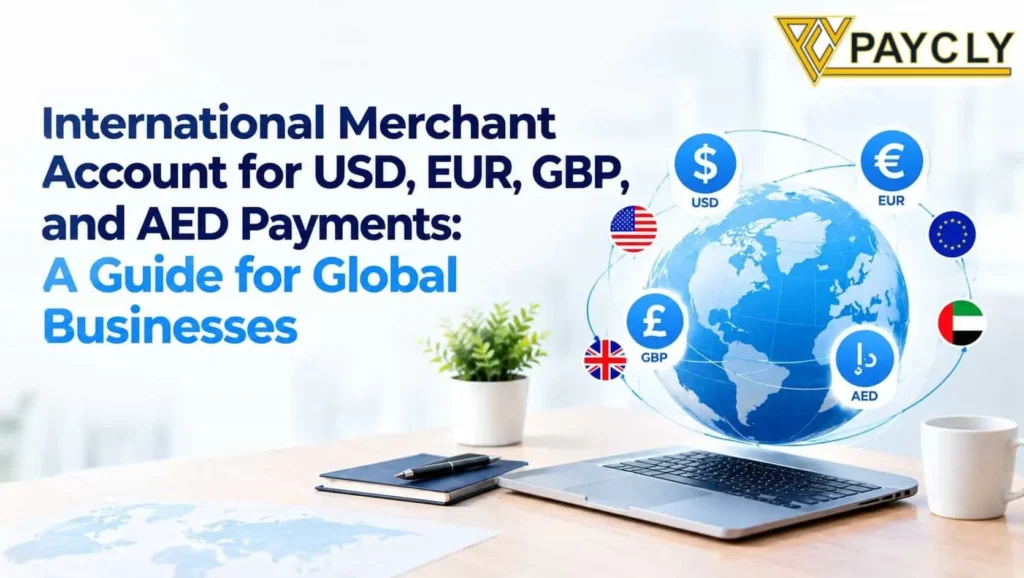
An international merchant account for USD, EUR, GBP, and AED payments helps businesses accept payments from customers across major global markets while managing currency conversion, settlement requirements, and cross-border payment risks. For companies expanding into the United States, Europe, the United Kingdom, and the United Arab Emirates, choosing the right international merchant account provider can make a significant difference to payment acceptance, cash flow, and customer experience.
However, opening an international merchant account is not always straightforward. Businesses operating in high-risk sectors such as forex trading, online gaming, subscription services, travel, nutraceuticals, and digital entertainment often face additional underwriting requirements. Some encounter repeated application rejections, higher processing fees, rolling reserves, delayed settlements, and transaction limits that make international growth harder than expected.
A suitable global merchant account solution should do more than process card payments. It should support the currencies a business needs, offer appropriate settlement arrangements, provide transparent pricing, and match the merchant’s industry, business model, and risk profile.
For businesses looking to expand internationally, PayCly offers a starting point for exploring payment solutions designed around cross-border commerce and merchant processing requirements.
What Is an International Merchant Account?
An international merchant account is a payment-processing arrangement that allows a business to accept electronic payments from customers in different countries or regions. Depending on the provider and acquiring arrangement, it may support international card transactions, multiple presentment currencies, cross-border acquiring, and settlement in one or more supported currencies.
For example, a business headquartered outside the United States may sell services to customers in the US, UK, Europe, and UAE. Rather than relying on a single domestic payment setup, it may need a payment solution that supports USD, GBP, EUR, and AED transactions.
These currencies serve different commercial markets:
- USD (US dollar): Useful for businesses serving American customers and international buyers who prefer dollar pricing.
- EUR (euro): Important for businesses selling into euro-area markets and other European markets where euro pricing is commercially appropriate.
- GBP (British pound): Relevant to UK customers and businesses with British commercial relationships.
- AED (UAE dirham): Useful for businesses serving customers in the United Arab Emirates and conducting business in the Gulf region.
It is important to distinguish between multi-currency payment acceptance and multi-currency settlement. A payment gateway may allow a customer to pay in a particular currency without giving the merchant the ability to receive settlement in that same currency. Settlement options depend on the acquirer, the merchant’s legal entity, the destination bank account, and the provider’s supported countries and currencies.
Businesses should confirm both capabilities before selecting an international payment processing solution.
Why Businesses Need USD, EUR, GBP, and AED Payment Support
Accepting payments in a customer’s preferred currency can reduce friction during checkout and make pricing easier to understand. It also helps businesses manage commercial relationships across different markets.
For example, a software company selling subscriptions internationally may charge American customers in USD, UK customers in GBP, European customers in EUR, and UAE customers in AED. A suitable payment infrastructure can help the company present localized prices while consolidating payment operations where its provider permits.
The main benefits include:
- Better checkout experience: Customers can see prices in a familiar currency rather than having to estimate conversion costs.
- Clearer international pricing: Businesses can develop market-specific pricing strategies.
- More efficient payment operations: Centralized reporting can simplify reconciliation across supported currencies.
- Improved cash-flow planning: Appropriate settlement arrangements can help businesses forecast when funds will arrive.
- Support for international expansion: A scalable merchant account can reduce the need to rebuild payment infrastructure for every new market.
Nevertheless, multi-currency processing does not automatically eliminate foreign-exchange costs, cross-border fees, chargebacks, or settlement delays. These depend on the payment route, card issuer, acquiring agreement, and merchant risk profile.
The Biggest Payment Challenges Facing High-Risk Merchants
For high-risk businesses, obtaining an international merchant account can be more complicated than simply submitting company documents and connecting a payment gateway. Acquirers assess the likelihood of fraud, customer disputes, regulatory issues, refunds, and financial losses before deciding whether to support a merchant.
Industries such as forex, gaming, adult entertainment, travel, nutraceuticals, and recurring digital services may receive additional scrutiny because of their business models, transaction patterns, or regulatory exposure. Classification depends on the specific activity, jurisdiction, and acquiring institution.
1. Repeated Merchant Account Rejections
One of the most frustrating problems for high-risk merchants is being rejected by payment providers without receiving a clear explanation of what needs to change.
A forex brokerage might have an established customer base and consistent revenue but still struggle to secure processing because of its operating jurisdictions, licensing arrangements, expected transaction volume, or customer acquisition practices.
Applying repeatedly without addressing the underlying risk factors can waste time and delay expansion.
An international high-risk merchant account should be evaluated against the merchant’s actual business model, ownership structure, licensing status, target markets, and processing history. Providers must confirm that the activity is permitted under their acquiring arrangements; no provider can guarantee approval for every business.
2. Rolling Reserves and Restricted Cash Flow
A rolling reserve is an agreed portion of processing proceeds withheld for a specified period to cover potential refunds, disputes, and other liabilities. Some high-risk merchants may also encounter delayed payouts or additional settlement conditions.
Consider a business processing USD 200,000 per month. If its acquiring agreement requires a 10% rolling reserve, USD 20,000 from that month’s processing volume would be allocated to the reserve, subject to the contract’s calculation and release terms.
For a growing business, this can limit the money available for advertising, payroll, supplier payments, and expansion.
When comparing international merchant account providers, merchants should examine reserve percentages, reserve duration, release schedules, settlement frequency, and the circumstances under which additional funds may be withheld.
3. High Processing Fees and Hidden Costs
International transactions can involve several cost components, including interchange, card-scheme fees, acquiring margins, cross-border charges, currency conversion, and additional risk-related pricing.
High-risk merchants may receive less favourable pricing than standard e-commerce businesses. The problem becomes more difficult when the quoted rate excludes gateway charges, refund fees, chargeback fees, reserve requirements, or minimum monthly fees.
A seemingly competitive rate may therefore produce a higher total cost of acceptance.
Businesses should request a complete pricing schedule and compare the total cost of international payment processing, not just the advertised transaction rate.
4. Chargebacks, Fraud, and Account Stability
Card-not-present businesses must manage unauthorized transactions, payment disputes, friendly fraud, and customers who do not recognize a billing descriptor.
Subscription businesses may face disputes over recurring charges, while travel merchants can experience cancellations and service-related claims. Forex and gaming businesses may have to manage disputes associated with account funding, withdrawals, service expectations, or customer complaints.
Visa’s merchant dispute guidance recommends monitoring dispute activity and addressing its underlying causes rather than treating each chargeback as an isolated incident. Visa’s Dispute Management Guidelines provide further guidance.
If dispute levels rise, a merchant may face additional scrutiny, higher costs, processing restrictions, or account termination, depending on the circumstances and applicable rules.
A reliable high-risk payment processing solution should therefore be assessed alongside fraud screening, transaction monitoring, 3-D Secure where appropriate, clear refund policies, and effective dispute management.
5. Currency Conversion and Settlement Delays
Accepting USD, EUR, GBP, and AED payments does not automatically mean a merchant can settle funds in all four currencies.
A provider may accept payments in several currencies but convert the proceeds into a single settlement currency. Another may offer multiple settlement options subject to eligible business entities, supported bank accounts, and underwriting approval.
Unexpected conversions can reduce margins, while delayed settlements can create difficulties when a business needs to pay international suppliers or meet operating expenses.
Before signing an agreement, ask the provider which currencies it supports for payment acceptance, which currencies are available for settlement, what conversion rates or markups apply, and whether settlement timelines differ by currency or transaction type.
What to Look for in an International Merchant Account Provider
Choosing a provider requires more than comparing headline processing rates. The right solution should fit the company’s commercial objectives, risk category, legal structure, and anticipated payment volume.
| Evaluation factor | What merchants should confirm |
| Currency support | Acceptance of USD, EUR, GBP, and AED, where required |
| Settlement options | Eligible payout currencies, settlement schedule, and bank-account requirements |
| Industry eligibility | Whether the provider and its acquiring partners support the exact business activity |
| Pricing transparency | Processing fees, cross-border charges, FX markups, refunds, and dispute fees |
| Reserve policy | Reserve percentage, release terms, and conditions for changes |
| Fraud prevention | Available screening tools, authentication, and transaction monitoring |
| Integration | Compatibility with the website, billing platform, shopping cart, or API |
| Reporting | Currency-level transaction reports and reconciliation tools |
| Compliance | KYC, AML, licensing, data protection, and applicable card-security requirements |
Merchants should also ask how the provider handles account reviews, unusual transaction spikes, changes in average ticket size, and requests for additional documentation. Clear communication can help businesses respond to underwriting concerns before they disrupt payment operations.
How PayCly Can Support International Payment Requirements
Businesses exploring international merchant accounts for USD, EUR, GBP, and AED payments need a provider that understands cross-border acquiring and the operational challenges of their industry.
PayCly provides a point of contact for businesses seeking international payment-processing options. Merchants can discuss their business model, target countries, preferred currencies, expected transaction volumes, and industry-specific requirements to determine which solutions may be suitable.
For high-risk merchants, the initial assessment should focus on the details that influence underwriting and payment operations, including:
- Business model and industry: Whether the provider can support the merchant’s specific products or services.
- Target markets: The countries where customers are located and where transactions will originate.
- Currency requirements: Whether the business needs USD, EUR, GBP, and AED acceptance, settlement, or both.
- Processing profile: Expected monthly turnover, average transaction value, payment frequency, and historical dispute rates.
- Company documentation: Business registration, ownership details, relevant licences, website policies, and other required compliance documents.
The availability of particular currencies, acquiring arrangements, settlement options, and pricing must be confirmed for each application. Approval is subject to underwriting and applicable regulatory requirements.
For businesses currently dealing with account rejections, restrictive reserves, or limited cross-border payment options, a structured review of these requirements can help identify the gaps that need attention before applying again.
Steps to Get an International Merchant Account
A well-prepared application can make the underwriting process more efficient, although approval timelines and outcomes depend on the provider and the merchant’s circumstances.
Step 1: Define your payment requirements
Identify your target countries, required currencies, expected monthly processing volume, average transaction size, and preferred settlement currencies.
Step 2: Prepare your business documentation
Organize company registration documents, ownership information, relevant licences, website terms, refund policies, and processing statements where available.
Step 3: Complete the risk assessment
Discuss your business model, chargeback history, customer locations, fraud controls, and any existing acquiring restrictions with the prospective provider.
Step 4: Review the commercial terms
Compare processing fees, reserve arrangements, settlement timelines, foreign-exchange charges, and termination clauses before signing.
Step 5: Integrate and monitor payments
Test the checkout experience, reconciliation process, refunds, and transaction monitoring before scaling international sales.
Security and Compliance Considerations
International payment processing involves responsibilities beyond accepting a successful transaction. Merchants should understand the rules that apply to their business, the countries they serve, and the payment methods they use.
For card payments, the PCI Security Standards Council publishes the Payment Card Industry Data Security Standard (PCI DSS), which establishes technical and operational requirements for protecting payment account data. Businesses should determine which requirements apply to their payment environment and work with appropriately qualified providers. See the official PCI SSC merchant guidance.
Depending on the business and jurisdiction, additional considerations may include customer verification, anti-money-laundering controls, sanctions screening, consumer disclosures, data protection, and sector-specific licensing.
A merchant account does not itself authorize a company to conduct regulated activities in every market. Forex brokers, gaming operators, and other regulated businesses must independently meet the applicable legal and licensing requirements.
Frequently Asked Questions
Q: Can I accept USD, EUR, GBP, and AED through one international merchant account?
Potentially, yes. Some acquiring arrangements support payments in multiple currencies through one merchant account or integrated payment setup. Availability depends on the provider, the merchant’s country, its business category, and the acquiring agreement. Confirm whether all four currencies are supported for acceptance and settlement.
Q: What is the best international merchant account for high-risk businesses?
The best option is one that supports the merchant’s specific industry, target markets, payment methods, and transaction profile while offering commercially workable fees and settlement terms. High-risk businesses should compare underwriting eligibility, reserve requirements, fraud controls, and dispute support rather than choosing on price alone.
Q: Why do international merchant account applications get rejected?
Common reasons include unsupported business activities, incomplete documentation, licensing concerns, elevated chargeback levels, unclear ownership structures, and risk exposure in certain markets. Merchants should ask which issues can be addressed before submitting another application.
Q: Can an international merchant account reduce currency conversion costs?
It may help, particularly when the provider supports suitable settlement currencies and transparent foreign-exchange pricing. However, multi-currency acceptance does not automatically eliminate conversion charges. Compare exchange-rate markups, settlement options, and other cross-border fees.
Q: How do rolling reserves affect high-risk merchants?
A rolling reserve temporarily restricts access to part of the merchant’s processing proceeds. This can reduce available working capital and make it harder to pay operating expenses. Merchants should understand the reserve percentage, holding period, release schedule, and circumstances that could change the terms.
Q: What documents are usually required to apply?
Requirements vary, but businesses commonly need company registration records, ownership and identity documents, business bank details, website information, relevant licences, processing history, and details of expected transaction volumes. High-risk sectors may require additional evidence of compliance and operational controls.
Q: Is an international merchant account the same as a payment gateway?
No. A payment gateway transmits payment information between the merchant’s checkout and the payment-processing infrastructure. A merchant account or acquiring arrangement enables card transactions to be processed and funds to be settled under agreed terms. Some providers offer integrated solutions, but the functions are distinct.
Find an International Payment Solution for Your Business
Expanding into the US, UK, European, and UAE markets requires payment infrastructure that matches both customer expectations and the merchant’s operational needs. Supporting USD, EUR, GBP, and AED can make international pricing more convenient, but the real value comes from combining suitable currency support with transparent fees, workable settlement terms, and effective risk management.
For high-risk merchants, the decision is particularly important. Repeated rejections, excessive reserves, unpredictable settlement arrangements, and costly disputes can undermine growth even when sales are increasing.
PayCly can help businesses explore international merchant account options based on their industry, target markets, and currency requirements. Before choosing a solution, confirm eligibility, supported currencies, fees, settlement arrangements, and compliance obligations.
Contact PayCly to discuss your international payment-processing requirements and explore a suitable next step for your business.