
Getting approved for a credit card merchant account is one of the most important steps for any business that wants to accept card payments. While the process may seem complicated at first, understanding what providers look for can make approval much smoother.
This guide walks through the merchant account approval process step by step, explaining what you need, why it matters, and how to avoid common mistakes that delay approval.
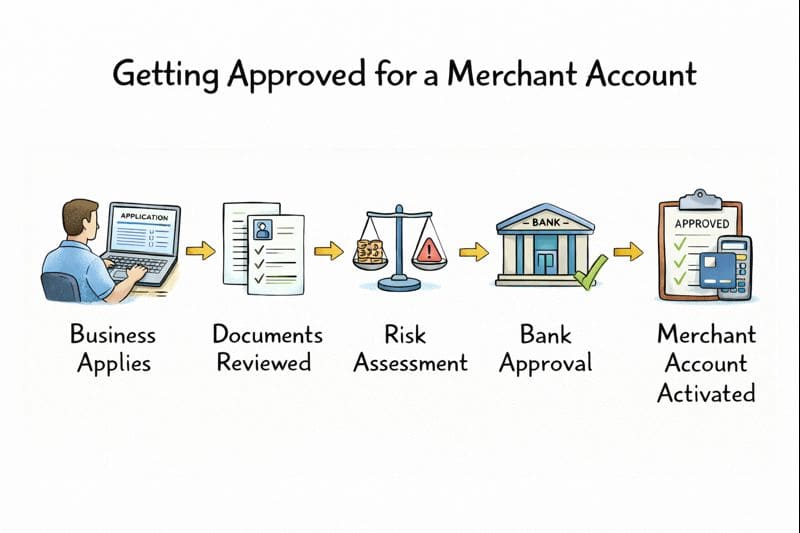
Step 1: Understand What a Merchant Account Is
A credit card merchant account is a special type of account that allows businesses to receive card payments. When a customer completes a transaction, funds are first deposited into the merchant account before being settled into the business’s regular bank account.
Because credit card payments involve risk, providers carefully review each application before approval.
Step 2: Prepare Your Business Information
Before applying, make sure your business details are complete and accurate. Most providers will request:
- Registered business name
- Business address and contact details
- Business bank account information
- Ownership and management details
Accurate information reduces delays during the merchant account approval process.
Step 3: Have a Functional Website Ready
For online businesses, the website plays a major role in approval.
Your website should clearly display:
- Products or services offered
- Pricing and billing terms
- Contact information
- Refund and cancellation policy
A transparent website signals legitimacy and helps providers feel confident about allowing you to accept credit card payments online.
Step 4: Understand Your Business Risk Level
Not all businesses are reviewed the same way. Merchant account providers assess risk based on factors such as:
- Industry category
- Monthly transaction volume
- Average transaction value
- Geographic markets served
If your business operates internationally, choosing a provider experienced in international payment processing can significantly improve approval chances.
Step 5: Gather Financial Documents
Most applications require basic financial documentation, including:
- Recent bank statements
- Processing history (if applicable)
- Estimated monthly sales volume
Providing realistic estimates helps prevent account limits or future reviews.
Step 6: Choose the Right Merchant Account Provider
Different providers support different business models. Some focus on local retail businesses, while others specialize in online and cross-border transactions.
When evaluating providers, look at:
- Supported card networks
- Settlement timeframes
- Chargeback handling procedures
- Compatibility with a payment gateway for online businesses
The right provider can make the approval process faster and more reliable.
Step 7: Submit the Application Carefully
When submitting your application:
- Double-check all business details
- Ensure document consistency
- Respond quickly to any follow-up questions
Incomplete or inconsistent applications are one of the most common reasons merchant accounts are delayed or declined.
Step 8: Prepare for Underwriting Review
After submission, the application enters underwriting review. During this stage, providers may request:
- Additional documentation
- Clarification on your business model
- Explanation of how payments will be processed
Clear communication and transparency help underwriting teams complete the review smoothly.
Step 9: Approval and Account Setup
Once approved, your merchant account will be connected to a payment gateway for online businesses, allowing you to start processing credit card payments.
Before going live, review:
- Processing limits
- Settlement schedules
- Refund and chargeback procedures
Understanding these details helps avoid operational issues after launch.
Common Reasons Merchant Account Applications Get Rejected
Merchant account applications are commonly declined due to:
- Unclear business offerings
- Missing website policies
- Inconsistent financial information
- Unsupported or restricted industries
Addressing these issues early improves approval outcomes significantly.
Final Thoughts
Getting approved for a merchant account doesn’t need to be complicated. With proper preparation, accurate documentation, and the right provider, most businesses can complete the process without unnecessary delays.
A well-set-up merchant account allows businesses to confidently accept credit card payments online while maintaining control over transactions and settlements.