
If you accept card payments online, chances are you’ve heard the term PCI compliance thrown around by your bank, payment gateway, or merchant account provider. For many business owners, it sounds technical, expensive, and easy to postpone.
That’s usually until something goes wrong.
As online payments grow, so do concerns around stolen card data, fraudulent transactions, and customer trust. PCI compliance exists to prevent these problems — and when done right, it protects both the merchant and the buyer in very real, practical ways.
Let’s break it down without the jargon.
The Real Problem Merchants Face with Card Payments
Running an online business already comes with enough stress: marketing, fulfillment, customer support, and cash flow. Payments should be the easy part — but often they’re not.
Merchants commonly struggle with:
- Fear of data breaches and card theft
- Chargebacks caused by fraud
- Banks suddenly reviewing or freezing accounts
- Customers losing trust after security incidents
Most of these issues trace back to how card data is handled.
That’s exactly where PCI compliance steps in.
What PCI Compliance Really Means (In Simple Terms)
PCI compliance refers to a set of security standards created by major card networks to ensure cardholder data is handled safely.
In plain language, it means:
- Card details are encrypted
- Sensitive data is never stored carelessly
- Payment systems are regularly monitored
- Only trusted systems can access card information
It’s not about punishing merchants. It’s about setting a minimum safety standard for everyone involved in the payment process.
How PCI Compliance Protects Merchants
1. Reduces the Risk of Costly Data Breaches
A single data breach can:
- Shut down your merchant account
- Trigger bank investigations
- Damage your brand overnight
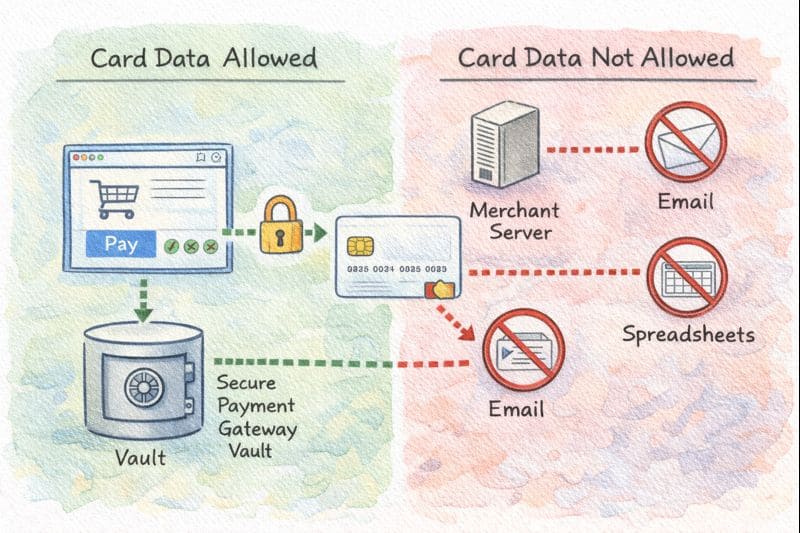
PCI-compliant systems are designed to minimize exposure by limiting where and how card data exists. Less stored data means less risk.
2. Lowers Chargebacks and Fraud Losses
Fraudulent transactions don’t just cost money — they hurt your processing reputation.
When your payment setup follows PCI standards:
- Fraud attempts are easier to detect
- Compromised card data is less likely
- Chargeback ratios stay under control
This keeps your merchant account stable and scalable.
3. Keeps Your Merchant Account Active
Banks and payment providers take compliance seriously. Merchants who ignore PCI requirements may face:
- Higher processing fees
- Rolling reserves
- Account termination
Being compliant shows processors that you’re a responsible, lower-risk business, which helps you negotiate better terms as you grow.
How PCI Compliance Protects Customers
1. Prevents Card Details from Being Misused
Customers trust you with their payment information. PCI standards ensure that:
- Card numbers aren’t exposed
- Transactions are processed securely
- Sensitive data isn’t shared or leaked
When customers feel safe, they come back.
2. Builds Confidence at Checkout
Security isn’t just technical — it’s psychological.
A secure checkout experience reduces:
- Cart abandonment
- Payment hesitation
- Fear of online fraud
When customers recognize trusted payment flows, they’re more likely to complete their purchase.
3. Protects Customers Across Multiple Transactions
Card breaches don’t just affect one purchase. Stolen card data can be reused across websites.
By following PCI rules, merchants play a role in protecting the entire payment ecosystem, not just their own store.
Common PCI Compliance Myths That Hurt Merchants
“My payment gateway handles everything.”
Gateways help, but merchants still have responsibilities depending on how payments are integrated.
“PCI compliance is only for big businesses.”
Small merchants are often targeted more, not less.
“It’s a one-time setup.”
Compliance is ongoing, not a checkbox you tick once.
Simple Steps to Stay PCI Compliant
You don’t need to be a security expert. Start with:
- Using a trusted payment gateway
- Avoiding storage of raw card data
- Keeping systems updated
- Completing required compliance questionnaires honestly
Working with a merchant account solution provider that understands compliance makes this process far less intimidating.
Why PCI Compliance Is a Growth Enabler, Not a Burden
Merchants often see PCI compliance as an obligation. In reality, it’s a business advantage.
It helps you:
- Scale without payment interruptions
- Build long-term customer trust
- Reduce financial and legal risk
Secure payments aren’t just safer — they’re smarter.
Final Thoughts
Online payments only work when trust exists on both sides of the transaction. PCI compliance is the framework that quietly protects that trust every day.
For merchants, it means stability and peace of mind.
For customers, it means confidence and security.
And for any growing online business, that protection is not optional — it’s essential.