
What is a Payment Gateway? This complete guide explains payment gateways in simple terms and helps you choose the right setup for your online business.
If you run an online business, one of the first challenges you’ll face is accepting payments securely and reliably. Customers expect smooth checkout experiences, but behind every successful transaction is a system quietly doing the heavy lifting.
That system is called a payment gateway.
Yet many business owners sign up for a payment gateway without fully understanding how it works, why payments fail, or why fees and declines keep happening.
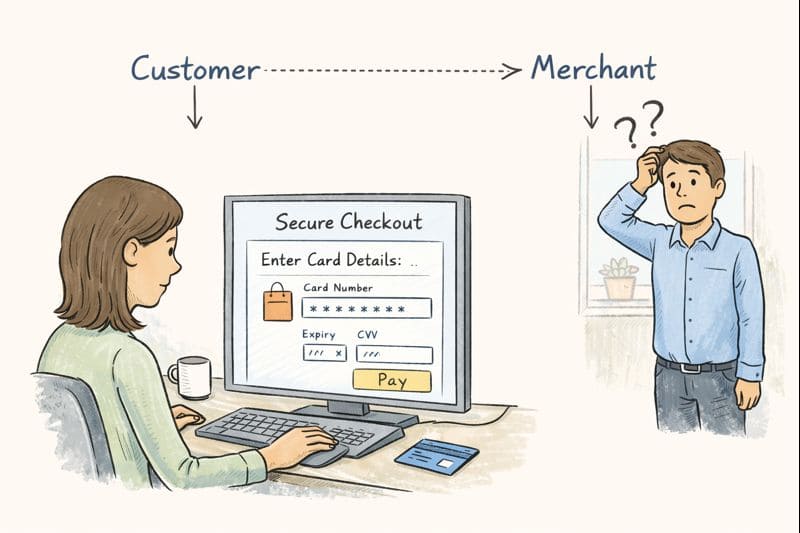
Why Online Businesses Need a Payment Gateway
When customers enter their card details on your website, that information can’t go directly to your bank. It needs to be encrypted, verified, and approved by multiple parties.
A payment gateway makes this possible by:
- Securing card details
- Connecting your website to banks and card networks
- Approving or declining transactions in real time
Without a payment gateway, accepting online credit card payments simply isn’t possible.
What Exactly Is a Payment Gateway?
A payment gateway is a technology service that processes credit card and debit card payments for online businesses.
It acts as the bridge between:
- Your website or shopping cart
- The customer’s card-issuing bank
- Your merchant account
When a customer clicks “Pay,” the gateway securely transmits payment details, checks for authorization, and sends the response back to your website — all within seconds.
How a Payment Gateway Works Step by Step
Understanding the process helps explain why payments sometimes fail.
- A customer enters card details on your checkout page
- The payment gateway encrypts the information
- The data is sent to the card network and issuing bank
- The bank approves or declines the transaction
- The result is sent back to your website
If any step fails, the payment is declined — often without a clear explanation to the merchant.
Common Problems Merchants Face With Payment Gateways
Many online businesses experience issues like:
- Frequent payment declines
- Customers abandoning checkout
- Delayed settlements
- Unclear error messages
- Higher fees than expected
These problems usually come from choosing the wrong payment gateway or misunderstanding how it works.
Hosted vs Integrated Payment Gateways
Hosted Payment Gateways
With a hosted gateway, customers are redirected to the provider’s secure payment page to complete the transaction.
Pros:
- Easier setup
- Lower security responsibility
- Faster approval for new merchants
Cons:
- Less control over checkout experience
- Customers leave your website
This option is popular with small businesses and startups.
Integrated Payment Gateways
Integrated gateways allow customers to pay directly on your website.
Pros:
- Better branding and customer experience
- Higher conversion rates
Cons:
- More technical setup
- Greater security responsibility
This option suits businesses with development resources and higher transaction volumes.
Payment Gateway vs Merchant Account
This is a common source of confusion.
- A payment gateway handles the transaction process
- A merchant account holds the funds before they are deposited into your bank
Most online businesses need both to accept credit card payments successfully.
Why Payments Get Declined
Payment declines frustrate both merchants and customers.
Common reasons include:
- Incorrect card details
- Bank security checks
- International transactions flagged as risky
- Mismatch between gateway and merchant account settings
Choosing a gateway that understands your business type can significantly reduce these issues.
Fees Associated With Payment Gateways
Payment gateway pricing usually includes:
- Per-transaction fees
- Monthly gateway fees
- Setup or integration charges
Some gateways also charge for failed or refunded transactions.
Merchant tip: Always ask for a complete fee breakdown before signing up.
Choosing the Right Payment Gateway for Your Business
When comparing providers, consider:
- Supported card types and currencies
- Ease of integration with your website
- Approval requirements
- Quality of customer support
- Transparency in pricing
The cheapest option is not always the best. Reliability and support matter just as much.
How a Good Payment Gateway Improves Business Growth
A reliable payment gateway helps you:
- Reduce checkout abandonment
- Build customer trust
- Process payments faster
- Expand to international customers
When payments work smoothly, customers are more likely to return.
Final Thoughts
A payment gateway is more than just a technical requirement — it’s a core part of your online business.
Understanding how payment gateways work allows you to make smarter decisions, avoid unnecessary fees, and create a better experience for your customers.
The right payment setup doesn’t just process transactions — it supports long-term growth.